Next Day Delivery for just £15.00
Article
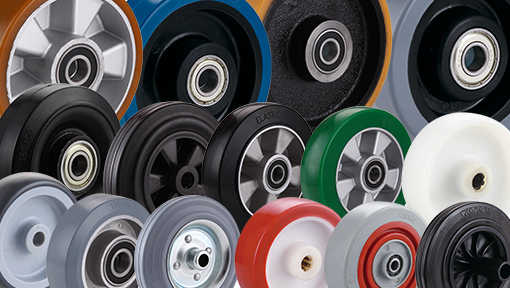
Before choosing a wheel, it is crucial to identify whether its material suits the environmental conditions it will encounter. These conditions include temperature, humidity, and the chemical composition of the operating environment, all of which can impact the wheel’s performance. These factors will inform your choice of tread material, wheel diameter, wheel bearing and wheel centre.
Tyres come in a variety of materials suitable for differing environments and working conditions. The basic principle is that the harder the wheel tread, the easier it moves and the less resistance it has to start motion. However, if the floor surface is hard, the tread required should be soft. Likewise, the wheel material should be hard if the floor surface is soft.
Weight load will also be an important factor when considering wheel centre material.
Designed to withstand shock impacts and efficiently bear heavy loads. Due to their sturdy construction, they can perform exceptionally well in harsh conditions. They are an ideal option for general material handling applications as they are lightweight and robust. However, they tend to create a lot of noise and may cause damage to floors.

An affordable option for standard wheels, but they may “skid” if they encounter small obstructions.

Water, steam, chemical, and oil resistant, making them ideal for light industrial or institutional applications.

Operate well in wet conditions, resist chemicals/oils, and are rated for a wide variety of temperatures.

A robust, hardwearing option that withstands higher shock impact loads than a standard plastic-centred wheel. The steel construction prevents the core from shattering when subjected to impact events.

A lightweight, stylish option with similar properties to steel centres.

Commonly used in heavy-duty applications, with a high load capacity, exceptional durability, and excellent heat resistance.

An ideal solution for applications requiring wheels to withstand high temperatures for extended periods. It is commonly found when dry heat is prevalent, such as in bakery convection ovens and powder coating booths.

These provide an excellent balance between push and pull forces, ground pressure, and capacity. With a medium shore hardness of around A92, they are often the ideal choice for carrying heavy loads while offering excellent non-marking floor protection, water resistance, chemical/oil resistance, and silent operation.

Features a soft, non-marking tread that protects floors, reduces vibration, and minimises noise.
A lower-cost alternative to Grey Rubber with similar properties. However, it may cause floor marking.

Available in blue or black. It has a specially developed compound that is hard-wearing, has a high load capacity, and is gentle on floors.

Designed with a microcellular-filled foam structure, allowing them to resist punctures. Their characteristics are similar to pneumatic tyres and offer the same damping properties. These tyres are particularly well-suited for wheelbarrows and trolleys that are utilised on soft surfaces like grass.

A great solution if the application needs to work on rough terrain. They give good shock absorption on soft, uneven surfaces and are popular for sports field and garden applications.

With decades of experience, our specialists are experts in advising and specifying top-quality wheel and castor solutions. Don’t hesitate to reach out and speak to an advisor today.
If you have a question around a product, or just a general query. Call us on 01296 431135, or submit the form below.
Receive 10% off of your first order with Coldene, use code WELCOME10