Next Day Delivery for just £15.00
Article
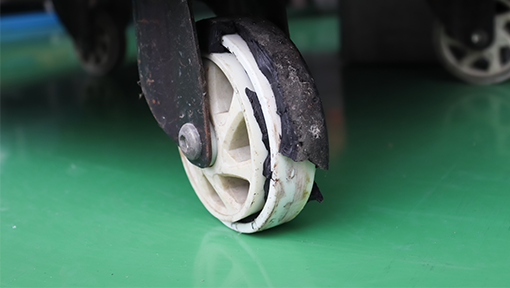
In industrial environments, castors are rarely the first thing people think about when evaluating equipment costs. Yet when a trolley fails mid-operation, when wheels flat-spot under load, or when a production line slows because a cart won’t track straight, the “savings” from budget castors disappear instantly.
At Coldene, we see the same pattern across warehouses, labs, clean rooms, and manufacturing plants: the cheapest castors are almost always the most expensive decision you can make. Here’s why
Many imported castors are rated using optimistic “laboratory” load capacities that don’t reflect dynamic forces. On the shop floor, vibration, uneven floors, and sudden impacts multiply the stress.
Coldene’s castors are engineered using realistic dynamic load calculations that include shock loads, speed, floor type and duty cycle—ensuring long-lasting performance under actual working conditions.
When a castor collapses, operations stop. Staff stand idle. The product gets damaged. Workflows back up. Replacing a failed wheel might cost £5… but downtime can cost thousands. This is where high-quality components—such as precision ball bearings, high-grade polyurethane, and reinforced forks—pay for themselves.
Low-grade plastics and poorly bonded polyurethane can gouge epoxy floors, shed material, or create vibration that damages sensitive equipment.
Coldene’s specialist ranges (from clean-room castors to high-temperature wheels and very heavy-duty container castors) are designed to protect both the load and the floor beneath it.
Cheap castors often have stiff bearings, inconsistent rolling resistance, or uneven wheel hardness (as indicated by the shore rating).
This means operators must push harder, turn wider, and fight the equipment—leading to:
Our wheels use premium sealed bearings, accurate shore-rated polymers, and high-precision hubs to ensure smooth rolling for the life of the castor.
A low-cost castor that needs to be replaced four times a year is more expensive than a premium castor that lasts for years.
Many companies don’t track this “maintenance creep”—but procurement teams always notice the drain eventually.
With Coldene, you get longer service life, consistent performance, and lower lifecycle cost.
It’s “How Much Does a Failure Cost?”
Coldene customers – from food production lines to aerospace facilities – choose our castors because they understand that quality isn’t a luxury. It’s a risk-reduction strategy.
So before choosing the cheapest option on the page, consider:
In most cases, a well-engineered castor isn’t the expensive option – it’s the smart one.
If you have a question around a product, or just a general query. Call us on 01296 431135, or submit the form below.
Receive 10% off of your first order with Coldene, use code WELCOME10